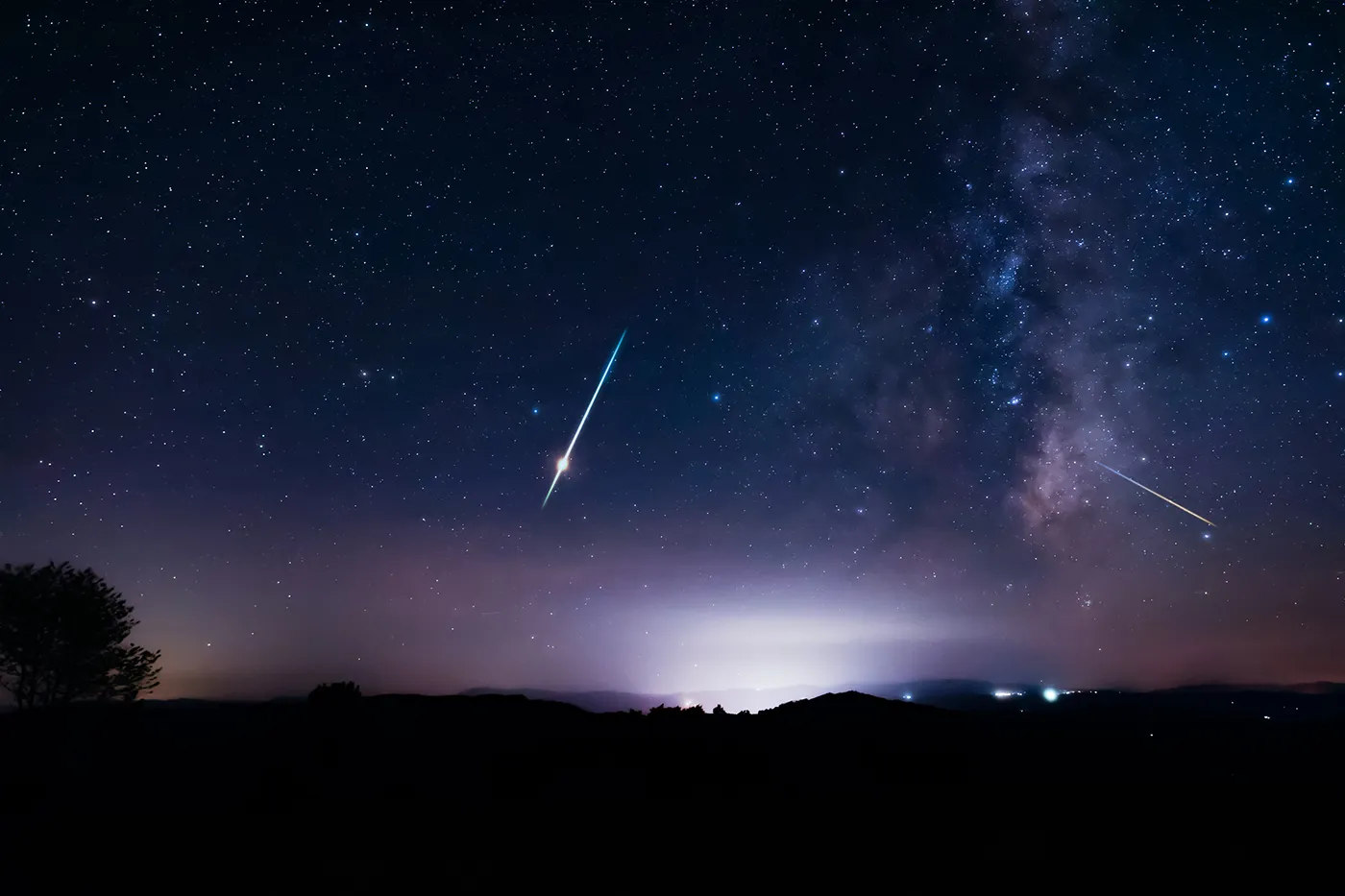
Though the Draconid meteor outburst peaked earlier, its scientific modeling reveals how modern astronomy fuses simulation, radar, and citizen science — a blueprint for 21st-century discovery.
In the first days of October 2025, observers anticipated a Draconid meteor outburst as Earth passed through comet 21P/Giacobini-Zinner’s debris trails. While the visual show may have been subtle, modelers and astronomers saw more: an opportunity to test predictive algorithms and calibrate meteor stream dynamics with unprecedented precision.
Three independent dynamical models (NIMS, MSFC, Sisyphus) projected radar-detectable meteor rates around 15:00–16:00 UTC, especially from debris ejected in 2005 and 2012.
The value lies not in spectacle but in scientific method:
- Model calibration: Discrepancies between models and observations help refine mass, velocity, and particle distribution assumptions.
- Cross-disciplinary data: Radar, optical sensors, and citizen skywatchers combine to build multi-modal datasets.
- Algorithmic learning: The data is used to tune AI predictive models for future meteor showers, space debris risk, and small-body dynamics.
In the era of big data astronomy, meteor outbursts like Draconids become natural laboratories. They teach us how to forecast cosmic dust storms, protect satellites, and understand small-body physics.
For Tezla News readers, bringing this kind of story — where high science meets public fascination — builds credibility and wonder.