The global economy runs on invisible highways.
Every day, thousands of cargo ships move through narrow maritime corridors, carrying everything from fuel and food to electronics and industrial materials. These routes are the arteries of globalization — and when one of them is disrupted, the effects ripple across the world.
In 2026, the Red Sea has once again become a point of concern.
Recent tensions in the region have led to increased risks for commercial shipping. Reports of attacks on vessels, rising insurance costs, and heightened military presence have forced some shipping companies to reconsider their routes. Many are now diverting ships around the southern tip of Africa — a much longer and more expensive journey.
At first glance, this may seem like a logistical issue. But in reality, it is a global economic stress test.
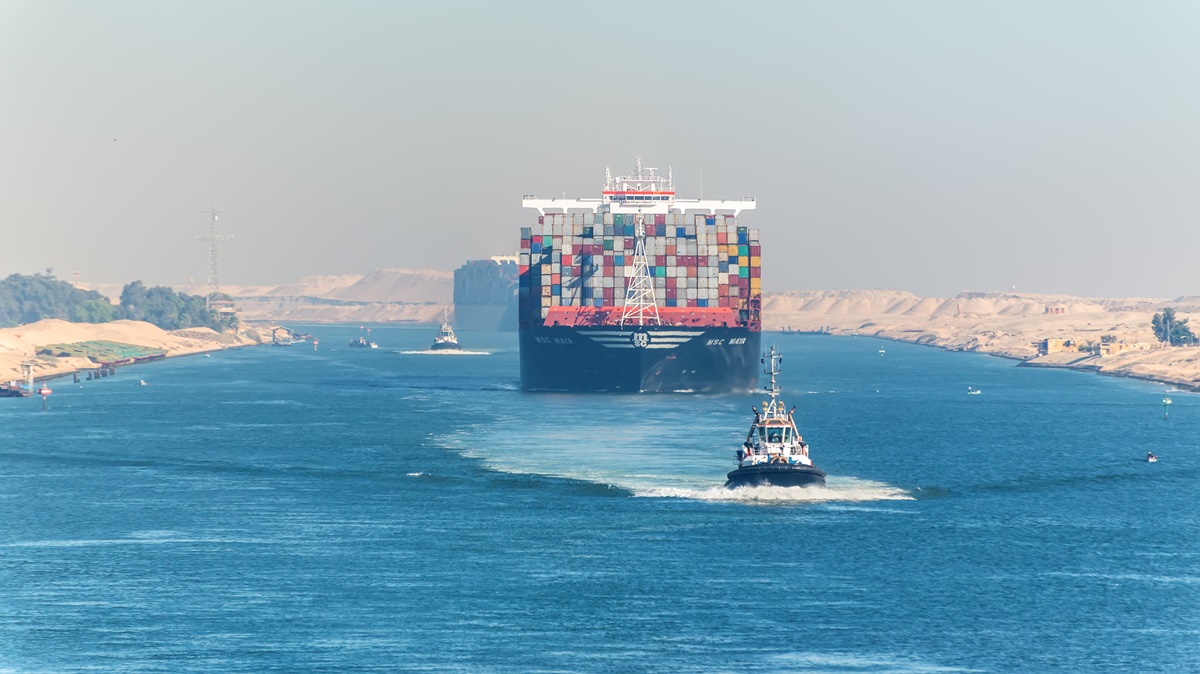
The Red Sea connects to the Suez Canal, one of the most critical chokepoints in international trade. Approximately 12% of global commerce passes through this route, including a significant portion of oil and gas shipments.
When this corridor is threatened, the consequences are immediate:
- Shipping costs increase, as longer routes require more fuel and time
- Delivery delays disrupt supply chains, affecting industries from manufacturing to retail
- Energy prices fluctuate, impacting households and businesses alike
For consumers, this may show up as higher prices or delayed products. But for economies — especially those heavily reliant on imports — the impact can be far more severe.
Countries in Africa and parts of Asia are particularly vulnerable. Many depend on maritime trade for essential goods, including food and fuel. When shipping becomes more expensive, these costs are often passed on to consumers, exacerbating inflation and economic strain.
But the issue goes beyond economics.
The Red Sea tensions highlight a fundamental vulnerability in globalization: its dependence on stability.
Modern supply chains are designed for efficiency, not resilience. They rely on predictable routes, just-in-time delivery systems, and tightly interconnected networks. When a single link is disrupted, the entire system feels the strain.
This is not the first time the world has faced such a challenge.
From the blockage of the Suez Canal in 2021 to pandemic-related disruptions, recent years have shown how fragile global logistics can be. Each crisis has prompted calls for diversification — building alternative routes, increasing local production, and strengthening regional supply chains.
Yet progress has been uneven.
For many businesses, efficiency still outweighs resilience. Rerouting supply chains can be costly, and shifting production closer to home is not always feasible. As a result, the global system remains exposed.
The Red Sea situation also underscores the intersection of geopolitics and economics.
Maritime routes are not just commercial pathways — they are strategic assets. Control over these corridors can influence global trade flows, energy security, and political leverage. This is why tensions in such regions often attract international attention and intervention.
For policymakers, the challenge is to balance immediate response with long-term strategy.
In the short term, ensuring the safety of shipping routes is critical. This may involve increased naval presence, diplomatic engagement, and coordination with international partners.
In the long term, however, the focus must shift toward building resilience:
- Diversifying trade routes
- Investing in regional production
- Strengthening supply chain transparency
- Developing contingency plans for disruptions
For individuals, these global dynamics may feel distant. But their effects are felt in everyday life — in the price of fuel, the availability of goods, and the stability of economies.
The Red Sea tensions are a reminder that globalization is not a fixed system. It is a dynamic network, shaped by politics, geography, and human decisions.
And in 2026, that network is being tested once again.