Artificial intelligence is rewriting scripts, generating faces, and even producing entire films. But artists and studios are now locked in a struggle over who truly owns creativity.
When “Echoes of Tomorrow” premiered on Netflix this year, few realized it was co-written by an AI system. The script, visual effects, and even parts of the soundtrack were generated by machine learning — with minimal human editing. Critics called it “eerily perfect.” Filmmakers called it “a warning.”
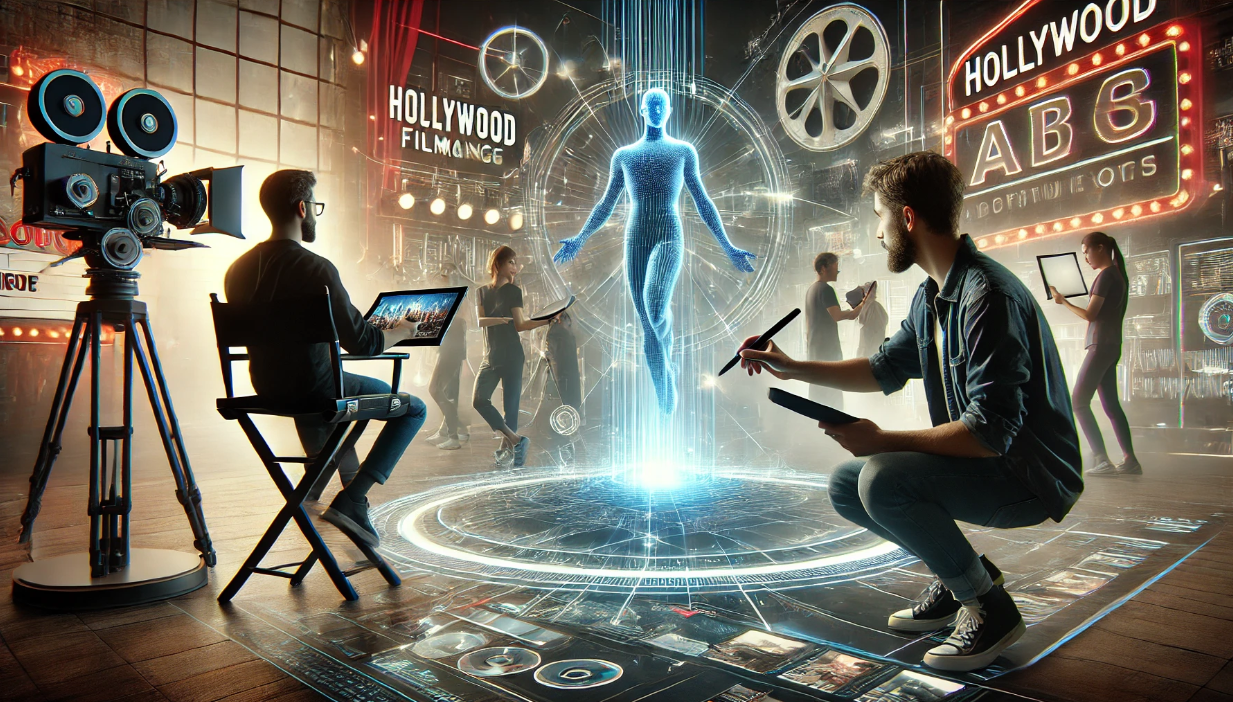
Hollywood is facing an identity crisis. Artificial intelligence, once a post-production tool, is now taking center stage. AI-driven storytelling platforms can generate screenplays in minutes, replicate an actor’s voice, or de-age performers for entire scenes.
To studios, it’s efficiency. To artists, it’s existential.
In 2024, Hollywood’s writers and actors’ strikes made headlines over AI-related disputes — and the echoes still reverberate. “If a studio can clone my voice and likeness forever, am I still part of my own legacy?” asked actress Zoe Kravitz in a viral interview.
The new debate isn’t about art versus technology. It’s about ownership, consent, and creativity. Should AI be credited as a “co-writer”? Should actors earn royalties when digital doubles appear in new productions? Who owns a story generated by a machine trained on human data?
Legally, the answers are murky. Courts are now flooded with cases over AI copyright, while unions are pushing for digital identity protection acts.
Yet AI is also empowering a new generation of independent filmmakers. With minimal budgets, creators are producing visually stunning short films using open-source AI tools. For them, AI isn’t theft — it’s freedom.
As the dust settles, Hollywood’s future may lie in collaboration, not conflict. The best art might come from humans who use AI not to replace imagination, but to amplify it.
The question isn’t whether AI can make movies — it already does. The real question is whether we’ll still recognize what makes a story human.