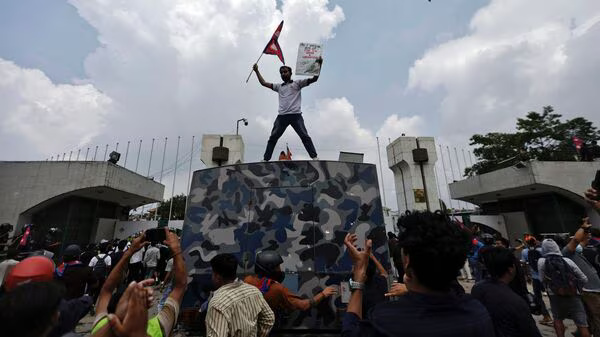
The sudden eruption of protests in Kathmandu has exposed deep cracks in the relationship between citizens and their governments — and how social media bans can ignite democratic unrest.
When thousands of protesters stormed Nepal’s Parliament in early September 2025, many outside observers dismissed it as another regional upheaval. But beneath the chaos lies a larger global story: the tension between governments’ attempts to control digital spaces and citizens’ hunger for free expression.
The crisis began when Nepal’s government abruptly banned major social media platforms, citing “national security” and “misinformation control.” Within days, protests erupted across the country. What was meant to silence dissent instead amplified it — with demonstrators coordinating through VPNs, encrypted apps, and offline networks.
This clash mirrors a growing global trend. From Nigeria’s 2021 Twitter ban to India’s digital media restrictions and Europe’s debates on “online harms,” governments are increasingly trying to manage social media’s political influence. But as seen in Nepal, the strategy often backfires.
“Silencing social media doesn’t silence the people,” says digital rights researcher Anjana Gurung. “It only convinces them the government is afraid of its own citizens.”
Analysts argue that the Nepal incident is part of a broader “digital democracy backlash.” Citizens today view access to online spaces as a fundamental right — as vital as freedom of speech itself. When governments block these platforms, they risk losing legitimacy in the eyes of connected, politically aware populations.
The incident also raises questions for global tech companies. Should platforms have emergency protocols when states impose sudden bans? Can they protect user access without violating local laws?
In the coming months, the way Nepal navigates this crisis will be watched closely by other nations balancing stability and liberty in the digital era. The message is clear: suppressing digital freedom can ignite the very unrest it seeks to prevent.